Wednesday, February 18, 2015

Park Meadows Country Club


Park Meadows Country Club is the only in-town golf and social club in the mountain town of Park City, Utah. Nestled in the exclusive Park Meadows neighborhood, the renowned Jack Nicklaus signature golf course and clubhouse with fitness center and swimming pool are located just minutes from historic Main Street and the three area ski resorts.
When Jack Nicklaus first visited what would become Park Meadows golf course, he saw beautiful fields, flowing streams and majestic peaks. The golf legend nestled a course into this dramatic scene, gracing his design with wooden bridges, a lacework of waterways and 105 sand bunkers. Opened in 1983, the course has delighted golfers of all abilities with its stunning scenery and challenging play.
Park Meadows members enjoy an enhanced lifestyle in Park City — named “Best Town Ever” by Outside magazine — making lasting friendships and family memories. Whether golfers or not, couples, families and individuals partake in fun parties and social events, and luxuriate in extraordinary cuisine prepared just for members and their guests.
Park Meadows Country Club implemented a new pricing program for golf membership initiation fees on Oct. 1. The program enables the Club to transfer memberships to prospective members at significantly lower initiation fees than in the past.
“The new market-based pricing program expedites the transfer of existing memberships to prospective members at prices that are acceptable to both parties,” said Kathy Volz, General Manager at Park Meadows. “It is a system with a proven track record of success at other premier clubs across the country, and we are excited about the many benefits it will provide for our existing and future members.”
Volz also points out that the new pricing provides an amazing membership value for part-time and year-round residents to enjoy the Club’s acclaimed golf course and award-winning cuisine, and to participate in winter ski groups and year-round social activities.
Membership prices may be locked in with an application and deposit, with processing completed in about five days. The Club currently has 245 golf members and 75 social members with total capacity for 350 members.

Thursday, February 12, 2015

Utah Ski Laws

Snow sports are a huge part of living in Utah. Thousands of skiers and snowboarders come to Utah to experience the best snow on earth. But, as with any sport there is risk involved. So, what is in place to protect you and your family at Utah ski resorts?
The Utah Inherent Risks of Skiing Act,” provides for skier assumption of the inherent risks of skiing, together with warning and notice posting requirements of operators. Operators remain liable for negligence and must exercise reasonable care in eliminating risks that can be reasonably eliminated”.
Essentially when anyone purchases a pass at any Utah resort they are assuming responsibility for to the risks associated with skiing and agree to follow safety guidelines of the resort. Prior to 2007 the pre-injury waiver also prevented the skier from holding the resorts liable for any injury sustained including those caused by the negligence or other fault of the operator, their agents and employees. However, in 2007 the Utah Supreme Court ruled in favor of a skier who was injured at Snowbird due to negligence by Snowbird. This set a precedence that operators are responsible for eliminating risks that can be eliminated by maintaining lifts, training staff and posting signs to indicate danger. [Source]
Recently, the Salt Lake Tribune published a story examining Utah laws that protect skiers and snowboarders from reckless actions of others on the mountain. In summary:
  • Reckless skiing or snowboarding is against the law in Summit and Salt Lake counties. Together, they encompass Deer Valley, Park City Mountain Resort, Canyons Resort, Solitude, Brighton, Snowbird and Alta.
  • Summit and Salt Lake county laws forbid hit-and-run accidents at ski resorts
  • If a skier or boarder is involved in an accident, they must remain at the scene to make sure others impacted receive proper care.
  • If charged with reckless skiing at a Utah resort, the skier could be charged with up to a class B misdemeanor, which carries a maximum six-month jail sentence and $1,000 fine.

Monday, February 9, 2015

3 Reasons Housing is Looking Up in 2015


Six years ago, homebuilders and Realtors were facing brutal business conditions: millions of Americans were losing their jobs and homes.
As 2015 begins, hiring is strong and economic indicators are pointing up. Could this be the year when the housing market finally breaks out of its tepid recovery and takes off?
Economists see several reasons why 2015 might be a banner year for homebuying — and not just in San Francisco and Miami.
They also see One Big Factor that potentially could block a buying binge.
Before considering that possible downer, let’s first look at the upside:
Employers are hiring again.
When companies are hiring, would-be homebuyers feel more confident about taking on mortgage debt.
During the recession, companies kept slashing positions, sending the unemployment rate soaring to 10 percent and frightening potential homebuyers. But job growth has been strong lately, with employers adding 321,000 jobs in November. The unemployment rate has tumbled to 5.8 percent.
As that good news sinks in, optimism is rising. The Conference Board’s latest Consumer Confidence Index shows confidence is running 19.5 percent higher than a year ago.
Home prices just took a breather, which helps.
From January to October, home prices rose 4.5 percent nationally, according to the latestS&P/Case Shiller Home Price Index. That gain was subdued compared with October 2013, when home prices jumped 11 percent higher than the previous year.
But slower price appreciation in 2014 may have set the stage for a buying surge in 2015. That’s because buyers need the right combination of steady income, decent savings, low interest rates and reasonable home prices to jump into the market.
The Labor Department’s latest jobs report showed an uptick in wages, and the surging stock market has been boosting savings. Mortgages have been holding below 4 percent for 30-year fixed rates.
And now the decelerating growth in home prices may be creating an affordability opportunity that will attract buyers in early 2015.
Rents are high.
When millions of Americans were losing their homes in the recession, many started moving into apartments. That shift caused rents to soar.
“With rents now rising at a seven-year high, historically low [interest] rates and moderating [home] price growth are likely to entice more buyers to enter the market in upcoming months,” Lawrence Yun, the National Association of Realtors’ chief economist, said in a release.
Millennials are sick of Mom’s basement.
The Census Bureau says just 36 percent of Americans under age 35 own a home. In 2007, that figure was 42 percent.
Some young people enjoy renting, but a recent survey by Fannie Mae showed 9 in 10 would prefer to own. They have been held back by tight lending standards that have made it tough to get around their heavy student debts and light savings.
But in December, Fannie Mae and Freddie Mac announced programs that would allow first-time buyers to get homes with down payments of just 3 percent, instead of 5 percent.
That lower amount would allow creditworthy but cash-strapped young buyers to qualify for mortgages. “If access to credit improves, we could see substantially larger numbers of young buyers in the market,” Jonathan Smoke, chief economist for Realtor.com, said in his 2015 outlook.
But there’s one reason for pessimism.
For years, many economists have been saying mortgage interest rates would rise. In 2015, they finally may be right.
That’s because the Federal Reserve, which has held down both short- and long-term interest rates since 2008, has been signaling a coming change. The Fed is expected to allow rates to drift up, probably starting this summer.

Tuesday, February 3, 2015

Vail & Technology


The use of RFID and the embrace of technology is also allowing Vail to turn its skiiers into marketers. As Rob Katz, CEO of Vail Resorts explains: “We decided that we would use our mountain photographers to take pictures of our guests, but first, because we have an RFID chip in every single pass, we could scan the pass, take the photo, and then that photo would show up in this person’s account online right away. And instead of charging for that photo, we gave the photo to the guests for free so they could share it on Twitter or Facebook.”
“And our view on photos and using this kind of customer-facing technology was that, if a guest wants to have a photo of themselves at our resort, and they want to put that on Facebook, then that’s the best advertising we could ever get, and we really shouldn’t be charging the guests for that. We should promote the guests to do that. And obviously when we did this, and then removed the fees and allowed them to do it for free, we saw an explosion in the number of photos that were being posted about our resort by our guests on Facebook and Twitter.”

Friday, January 30, 2015

Cross Country Ski Trails in Park City, Utah


While most people think of Park City, Utah as the Mecca for downhill skiers perhaps the best kept secret is its Nordic skiing! Utah has some of the best flavors of Nordic skiing whether you are a track skiing or a backcountry skier. Summit County’s Nordic trails system has grown tremendously in both size and popularity over the past several years. And best of all, the skiing is very accessible so you aren’t spending all your time driving. It has truly become a world class Nordic system that rivals the best in the country. Park City and the surrounding area now boast nearly 80 kilometers of groomed, multi-use trails.
The skiing usually starts in early November in the high country, and the Nordic Ski Centers are operational in early December. Things wrap up at the end of March although many places push to stay open until Easter. And in the high country you can often get turns or skate the crust into May. It all depends on the weather gods, but usually they are pretty generous with the snow.
Nordic Center at Jeremy Ranch Golf and Country ClubThe Jeremy Golf and Country Club sets track on its course during the winter and has discounts for TUNA (The Utah Nordic Alliance) members and is located at the Jeremy Ranch exit of I-80, just west of Park City/Kimball Junction. Hours: Monday through Sunday, 9- 5pm. Groomed daily. Food available, ski tuning available, rentals and Nordic apparel and ski’s for sale. Nordic 2015 rates.
Round ValleyThe 20 kilometers of Round Valley trails are accessed from a variety of points in Park City. The most convenient is probably the Quinn’s Trailhead near the National Ability Center complex off UT 248. These free trails are maintained by the Mountain Trails Foundation.
The Historic Union Pacific Rail TrailThe “Rail Trail” extending from Bonanza Drive in Park City to Wanship offers an additional 10-20K of groomed trail which connects directly into the Round Valley trail system.
Snyderville Basin Special Recreation DistrictJust North of Park City, Basin Recreation provides 20K of groomed multi-use trails, some of which connect directly into the Park City system. You can find the latest grooming reports for the Basin Recreation Nordic Trails here.
White Pine Nordic CenterFor the serious skier, 25K of daily groomed, fee based trails can be found at the White Pine Nordic Center.

Monday, January 26, 2015

Vail Update for January 2015


Revenue increases outpaced skier-traffic gains at the start of the 2014-15 season for Vail Resorts Inc., but both are on an upward trajectory, the company said Wednesday. Through Jan. 11, lift-ticket revenue at the nine Western resorts was up a combined 9.3 percent compared to the same early-season period in 2013-14.
Broomfield, CO - Ski resort operator Vail Resorts, Inc. reported certain ski season metrics that show an increase in both visitation and revenue at the company’s destination mountains across the western U.S.
The results are provided for the comparative periods from the beginning of the ski season through January 11, 2015, and for the prior year period through January 12, 2014, adjusted as if Park City Mountain Resorts was owned in both periods, and do not incorporate the urban ski areas of Afton Alps (Minn.) and Mt. Brighton (Mich.). Season-to-date total skier visits for the company’s nine mountain resorts were up 1.8% compared to the prior year season-to-date period. Season-to-date total lift ticket revenue, including an allocated portion of season pass revenue for each applicable period, was up 9.3% compared to the prior year season-to-date period. Season-to-date ancillary spending also increased over the prior year, with ski school revenue up 9.2% and dining revenue up 6.8%. Additionally, retail/rental revenue for resort store locations was up 10.4% compared to the prior year season-to-date period.
“We are very pleased with our company-wide results season-to-date, which are consistent with our original expectations,” said Rob Katz, Chief Executive Officer.  “Our Colorado resorts had particularly strong results with very strong destination visitation and consistent conditions.  While Utah had a slower start to the holiday period, we saw very good momentum in the week following Christmas, with strong visitation at both resorts.

Thursday, August 28, 2014

Getting a Mortgage: Why SO MUCH Paperwork?


We are often asked why there is so much paperwork mandated by the bank for a mortgage loan application when buying a home today. It seems that the bank needs to know everything about us and requires three separate sources to validate each and every entry on the application form. Many buyers are being told by friends and family that the process was a hundred times easier when they bought their home ten to twenty years ago. There are two very good reasons that the loan process is much more onerous on today’s buyer than perhaps any time in history.
  1. The government has set new guidelines that now demand that the bank provebeyond any doubt that you are indeed capable of affording the mortgage. During the run-up in the housing market, many people ‘qualified’ for mortgages that they could never pay back. This led to millions of families losing their home. The government wants to make sure this can’t happen again
  2. The banks don’t want to be in the real estate business. Over the last seven years, banks were forced to take on the responsibility of liquidating millions of foreclosures and also negotiating another million plus short sales. Just like the government, they don’t want more foreclosures. For that reason, they need to double (maybe even triple) check everything on the application.
However, there is some good news in the situation. The housing crash that mandated that banks be extremely strict on paperwork requirements also allowed you to get a mortgage interest rate probably below 5%. The friends and family who bought homes ten or twenty ago experienced a simpler mortgage application process but also paid a higher interest rate (the average 30 year fixed rate mortgage was 8.12% in the 1990’s and 6.29% in the 2000’s). If you went to the bank and offered to pay 7% instead of <5%, they would probably bend over backwards to make the process much easier.

Bottom Line

Instead of concentrating on the additional paperwork required, let’s be thankful that we are able to buy a home at historically low rates. 

Monday, August 25, 2014

Buying a Home? Know ALL Your Options


In a post earlier this week, we suggested that the Millennial generation’s struggles with student debt and the overarching concept of homeownership are not the reasons for so many first time buyers hesitating to move forward with the purchase of their first home. Now there is another firm suggesting the same. The asset management company,Nomura, came out with strong guidance to their investors. According to an article inHousing Wire last week: “Nomura’s note to clients has a take few have offered: The first time homebuyers are holding out and it’s not student debt, a shift away from homeownership as a choice by Millennials, or any of that.” Instead, they think it is a lack of a full understanding of the mortgage process. The article explains: “Analysts say it’s not that Millennials and other potential homebuyers aren’t qualified in terms of their credit scores or in how much they have saved for their down payment. It’s that they think they’re not qualified or they think that they don’t have a big enough down payment.” (emphasis added) This comes off the heels of a survey by Zelman & Associates that revealed that 38% of those between the ages of 25-29 years old and 42% of those between the ages of 30-34 years old believe that a minimum of 15% is required as a down payment to purchase a home. In actually, a purchaser may be able to put down far less.

The Reality of the Situation

According to Christina Boyle, Freddie Mac’s VP and Head of Single-Family Sales & Relationship Management, in a recent Executive Perspectives piece:
  • A person “can get a conforming, conventional mortgage with a down payment of as little as 5 percent (sometimes with as little as 3 percent coming out of their own pockets)”.
  • Freddie Mac's purchase of mortgages with down payments under 10 percent more than quadrupled between 2009 and 2013.
  • More than one in five borrowers who took out conforming, conventional mortgages in 2014 put down 10 percent or less.
  • Qualified borrowers can further reduce the down payment coming out of their own pockets to 3 percent by lining up gifts from family or grants or loans from non-profits or public agencies.
Ms. Boyle goes on to explain: “Letting more consumers know how down payments are determined could bring more qualified borrowers off the sidelines. Depending on their credit history and other factors, many borrowers can expect to make a down payment of about 5 or 10 percent.”

Bottom Line

If you have considered purchasing a house or moving-up to a new dream home, know all of your options. Reach out to a real estate and/or mortgage professional in your marketplace to get the best, most up-to-date information available. You may be surprised to learn what you and your family are capable of achieving. 

Friday, August 22, 2014

How Much of a Down Payment Do You Actually Need?


A recent survey by Zelman & Associates revealed that 38% of those between the ages of 25-29 years old and 42% of those between the ages of 30-34 years old believe that a minimum of 15% is required as a down payment to purchase a home. A recent questionnaire administered by Freddie Mac showed that over 50% of all respondents thought 20% was required as a down payment. In actuality, a purchaser may be able to put down far less. Freddie Mac, in a recent blog post addressing the issue, confirmed that there is misinformation regarding the amount necessary when determining the down payment for a home purchase: “Did you know 40 percent of today's homebuyers using mortgage financing are making down payments that are less than 10 percent? And how about this: since 2010, the number of people putting down less than 10 percent for conventional loans has grown three fold.  So, not only are low down payment options real, they represent a significant portion of today's purchases.” In a separate Executive Perspectives, Christina Boyle, Freddie Mac’s VP and Head of Single-Family Sales & Relationship Management explained further:
  • A person “can get a conforming, conventional mortgage with a down payment of as little as 5 percent (sometimes with as little as 3 percent coming out of their own pockets)”.
  • Qualified borrowers can further reduce the down payment coming out of their own pockets to 3 percent by lining up gifts from family or grants or loans from non-profits or public agencies.
Ms. Boyle goes on to explain: “Letting more consumers know how down payments are determined could bring more qualified borrowers off the sidelines. Depending on their credit history and other factors, many borrowers can expect to make a down payment of about 5 or 10 percent.”

Bottom Line

If you are saving for either your first home or that perfect move-up dream house, make sure you know all your options. You may be pleasantly surprised. 

Tuesday, August 19, 2014

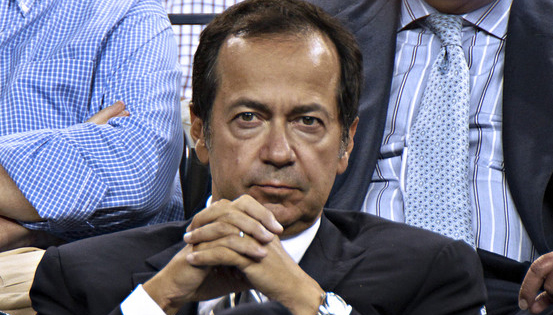
Billionaire says Real Estate is Best Investment Possible


Billionaire money manager John Paulson was interviewed last week at the Delivering Alpha Conference presented by CNBC and Institutional Investor. He boldly stated:
"I still think, from an individual perspective, the best deal investment you can make is to buy a primary residence that you're the owner-occupier of.”

Who is John Paulson?

Paulson is the person who, back in 2005 & 2006, made a fortune betting that the subprime mortgage mess would cause the real estate market to collapse. He understands how the housing market works and knows when to buy and when to sell. What do others think of Paulson? According to Forbes, John Paulson is:
“A multibillionaire hedge fund operator and the investment genius.”
According to the Wall Street Journal, Paulson is:
“A hedge fund tycoon who made his name, and a fortune, betting against subprime mortgages when no one else even knew what they were.”

Why does he believe homeownership is such a great investment?

Paulson breaks down the math of homeownership as an investment:
"Today financing costs are extraordinarily low. You can get a 30-year mortgage somewhere around 4.5 percent. And if you put down, let's say, 10 percent and the house is up 5 percent, which is the latest data, then you would be up 50 percent on your investment."
How many are seeing a 50% return on a cash investment right now? Paulson goes on to compare the long term financial benefits of owning verses renting:
“And you’ve locked in the cost over the next 30 years. And today the cost of owning is somewhat less than the cost of renting. And if you rent, the rent goes up every year. But if you buy a 30-year mortgage, the cost is fixed.”

Bottom Line

Whenever a billionaire gives investment advice, people usually clamor to hear it. This billionaire gave simple advice – if you don’t yet live in your own home, go buy one.

Saturday, August 16, 2014

Buying a House? 4 Reasons to DO IT NOW


Here are four great reasons to consider buying a home today, instead of waiting.

1. Prices Will Continue to Rise

The Home Price Expectation Survey polls a distinguished panel of over 100 economists, investment strategists, and housing market analysts. Their most recent report projects appreciation in home values over the next five years to be between 30.8% (most optimistic) and 9.4% (most pessimistic). The bottom in home prices has come and gone. Home values will continue to appreciate for years. Waiting no longer makes sense.

2. Mortgage Interest Rates Are Projected to Increase

Although the Primary Mortgage Market Survey shows that interest rates for a 30-year mortgage are currently around 4.2%, Freddie Mac is projecting that rates will increase to 5.2% by this time next year. An increase in rates will impact YOUR monthly mortgage payment. Your housing expense will be more a year from now if a mortgage is necessary to purchase your next home.

3. Either Way, You are Paying a Mortgage

As a research paper from the Joint Center for Housing Studies at Harvard Universityexplains: “Households must consume housing whether they own or rent. Not even accounting for more favorable tax treatment of owning, homeowners pay debt service to pay down their own principal while households that rent pay down the principal of a landlord plus a rate of return. That’s yet another reason owning often does—as Americans intuit—end up making more financial sense than renting.”

4. It’s Time to Move On with Your Life

The ‘cost’ of a home is determined by two major components: the price of the home and the current mortgage rate. It appears that both are on the rise. But, what if they weren’t? Would you wait? Look at the actual reason you are buying and decide whether it is worth waiting. Whether you want to have a great place for your children to grow up, you want your family to be safer, or you just want to have control over renovations, maybe it is time to buy. If the right thing for you and your family is to purchase a home this year, buying sooner rather than later could lead to substantial savings. 

Wednesday, August 13, 2014

Buying a Home? You Don’t Need to Do It Alone


Last week, Discover Home Loans released an interesting survey which revealed how prepared home buyers are for the actual mortgage process. The survey reported that 94 percent of prospective buyers believe they are making a good investment decision if they buy a home. The survey also explained that 66 percent of buyers reach out to real estate agents to help determine whether buying a certain home would be a good investment. However, there is less certainty regarding the mortgage process. 

Most buyers overwhelmed

The majority of potential buyers are actually overwhelmed with the plethora of information available about the home financing process.  Here are some interesting highlights from the report: 
  • Nearly 66% feel overwhelmed with the amount of information available
  • 76% of those under the age of 30 feel overwhelmed
  • 76% of first time buyers feel the same way
  • 54% of those buyers who have previously owned also were overwhelmed
  • 59% of buyers turn to mortgage bankers to help evaluate mortgage terms and comparing offers
  • 49% of buyers turn to real estate agents to help evaluate mortgage terms and comparing offers

There is help available…use it!

Cameron Findlay, chief economist at Discover Home Loans, gives great advice: 
“The industry is becoming more transparent in an effort to help homebuyers become informed about changes that may affect their process. The sheer amount of information can lead to confusion and stress. Those looking to purchase should work closely with their lender and realtor to make sure they are comfortable with mortgage terms and understand the impact a loan will have on their finances.”

Bottom Line

The purchasing of a home can put great pressure on a family. Reach out to the best mortgage and real estate professionals in your market for assistance throughout the process. 

Sunday, August 10, 2014

Homeownership's Impact on Net Worth


Over the last six years, homeownership has lost some of its allure as a financial investment. As homeowners suffered through the housing bust, more and more began to question whether owning a home was truly a good way to build wealth. A study by the Federal Reserve formally answered this question. 

Some of the findings revealed in their report:

  • The average American family has a net worth of $77,300
  • Of that net worth, 61.4% ($47,500) of it is in home equity
  • A homeowner’s net worth is over thirty times greater than that of a renter
  • The average homeowner has a net worth of $174,500 while the average net worth of a renter is $5,100

Thursday, August 7, 2014

Home Prices…Where are They Headed?


Today, many real estate conversations center on housing prices and where they may be headed. That is why we like the Home Price Expectation Survey. Every quarter, Pulsenomics surveys a nationwide panel of over one hundred economists, real estate experts and investment & market strategists about where prices are headed over the next five years. They then average the projections of all 100+ experts into a single number.  

The results of their latest survey
  • Home values will appreciate by 4.6% in 2014.
  • The cumulative appreciation will be 19.5% by 2018.
  • That means the average annual appreciation will be 3.6% over the next 5 years.
  • Even the experts making up the most bearish quartile of the survey still are projecting a cumulative appreciation of 11.2% by 2018.
Individual opinions make headlines. We believe the survey is a fairer depiction of future values.